How Much Diesel Should a Construction Site Keep On Hand?


Created Date
24 July , 2026
INTRODUCTION
How Much Diesel Should a Construction Site Keep On Hand?
Knowing how much diesel to keep on a construction site is one of the most important operational decisions a contractor can make. Too little fuel leads to downtime and delays. Too much can create unnecessary costs, storage concerns, and inefficiencies.
For contractors working across Tinton Falls, Eatontown, Long Branch, Oceanport, Red Bank, Neptune, Newark, and Paterson, fuel planning is not just about convenience. It is about maintaining productivity, controlling costs, and keeping projects on schedule.
Super Quality Oil helps contractors determine the right fuel strategy through bulk fuel delivery, fuel tank rentals, on-site fueling, and fuel management services across New Jersey and New York City.
Why Fuel Planning Matters on Job Sites
Fuel is one of the few resources that directly controls whether work can continue or stop. Materials can sometimes be delayed or rescheduled. Labor can be shifted. Equipment, however, cannot run without diesel.
Without a clear fuel strategy, job sites often experience:
- Unexpected fuel shortages
- Over-ordering and wasted fuel
- Inconsistent delivery schedules
- Difficulty tracking usage across equipment
Projects in fast-moving areas like Eatontown commercial developments or Newark infrastructure work can see rapid changes in fuel demand, making accurate planning even more important.
Key Factors That Determine Diesel Needs
There is no one-size-fits-all answer. The amount of diesel a job site needs depends on several operational factors.
Equipment Type and Size
Larger machines such as excavators and loaders consume significantly more diesel than smaller equipment like skid steers. A site with multiple large machines will require a higher daily fuel supply.
Daily Operating Hours
A job site running 10 to 12 hours per day will use more fuel than one operating on a shorter schedule. Overtime work and accelerated timelines increase consumption.
Number of Machines on Site
The more equipment in operation, the greater the total fuel demand. Multi-phase projects in Tinton Falls or Long Branch often involve several machines running simultaneously.
Project Phase
Fuel usage fluctuates depending on the stage of construction. Early site work and heavy excavation typically require more diesel than finishing phases.
How Much Diesel Should You Keep On Hand?
While every project is different, most contractors follow a general guideline:
- Maintain 2 to 5 days of diesel supply on-site
- Adjust based on equipment usage and delivery schedules
- Increase reserves during peak construction phases
This approach provides a buffer against unexpected demand while avoiding excessive storage.
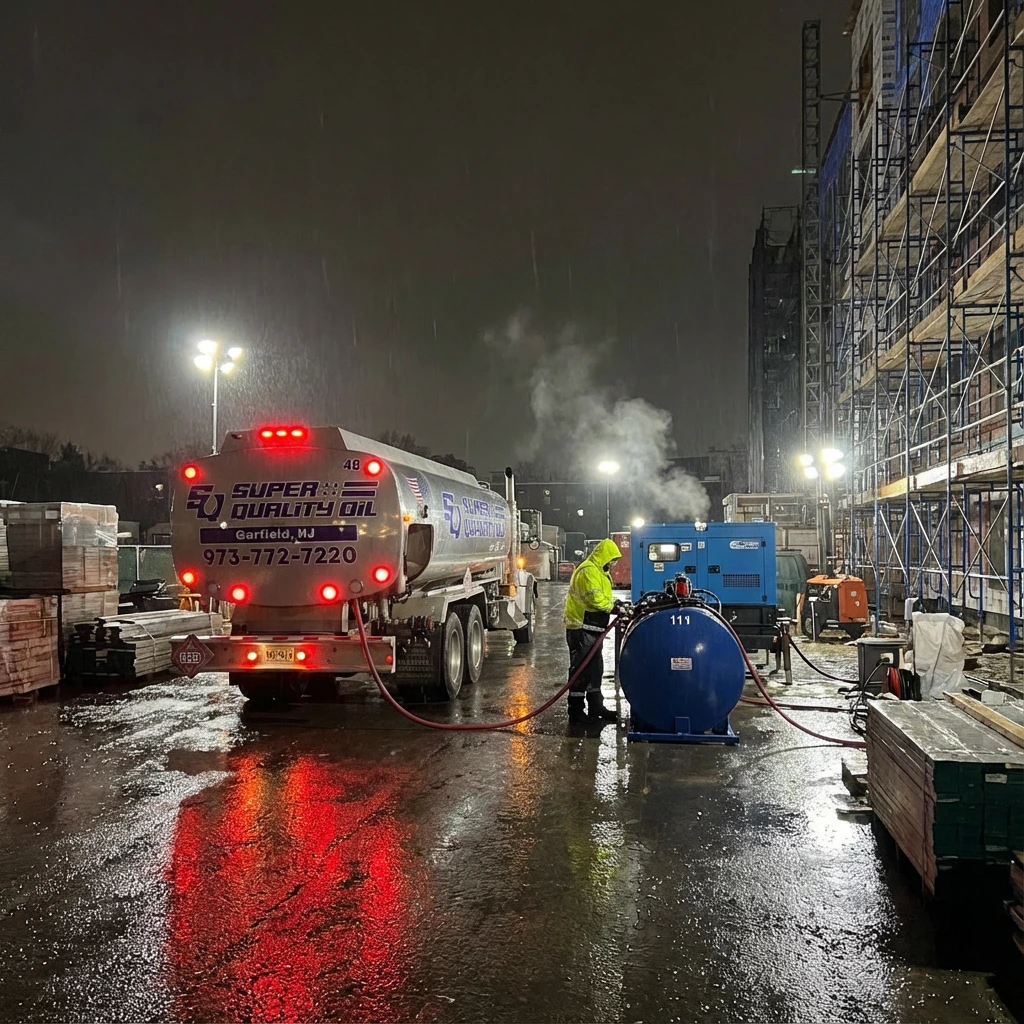
Using Fuel Tank Rental Services allows contractors to safely store this fuel on-site and scale capacity as needed.
Building a Reliable Fuel Supply Strategy
Scheduled Bulk Fuel Delivery
Using Bulk Fuel Delivery Services ensures diesel is replenished consistently based on your job site’s consumption.
This reduces reliance on last-minute orders and helps maintain steady operations across Monmouth County and North Jersey.
On-Site Fueling for Equipment
With Equipment Fueling Services, fuel is delivered directly to machinery.
This:
- Eliminates travel time to fuel stations
- Keeps operators productive
- Ensures equipment is ready at the start of each shift
Fuel Monitoring and Usage Tracking
Using Fuel Management Services provides visibility into how much fuel is being used and when deliveries are needed.
This allows contractors to:
- Adjust delivery schedules
- Prevent shortages
- Reduce waste
Real-World Scenarios
Commercial Construction
Projects in Eatontown and Oceanport often require multiple machines running simultaneously, increasing fuel demand.
Infrastructure Work
Projects along Route 18 and Route 35 require continuous operation, making fuel planning essential.
Urban Job Sites
In Newark and Paterson, space limitations make efficient fuel storage and delivery critical.
Frequently Asked Questions
How do I calculate fuel usage for my job site?
Fuel usage depends on equipment type, hours of operation, and workload. Tracking daily consumption helps create accurate estimates.
Is it better to store fuel or rely on deliveries?
Most contractors use a combination of both to maintain flexibility and avoid shortages.
What happens if I store too little fuel?
Running out of diesel leads to downtime, delays, and increased costs.
Closing
Keeping the right amount of diesel on-site is essential for maintaining productivity and avoiding costly disruptions. Contractors across New Jersey and NYC rely on Super Quality Oil to deliver consistent, scalable fuel solutions.
.webp)
.webp)
.webp)
.webp)


.svg)

.svg)

.svg)
